The performance by Huang Qishan and Curley G on the Spring Festival Gala stage perfectly portrayed the deep bond between mother and daughter.
Cover Image

Image source: People's Daily Bilibili live broadcast
On New Year's Eve, during this moment of family reunion, border soldiers guard China's western gateway in the cold wind. Salute!
Attached: Location of Alashankou in Xinjiang, China.

Topic: Does the Internet Have Memory?
The internet is the greatest invention of our era, driving social development and progress and affecting people's lives. But does it really have memory? Of course, this is a dialectical topic. In this discussion, I'll explore from the perspective of internet memory dissipating.
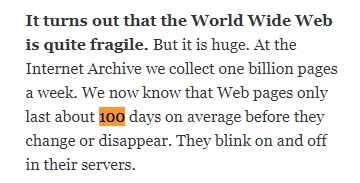
Brewster Kahle, founder of the Internet Archive, mentioned in his blog post1 that web pages have an average lifespan of only about 100 days before being changed or disappearing.
Whenever clicking on links first published on the internet years ago, websites that still work are rarely maintained by individuals—most are by businesses or companies. Personal sites are the most fragile part of the internet. Those who persevere with personal sites are few; many webmasters take their sites offline for various reasons.
Sites that go offline without being crawled by the Internet Archive will completely disappear from the internet. At most, only the webmaster has a vague memory that they once built a website, but their memory of what the site looked like will gradually fade with time until extinction. Therefore, the memory nature of the internet isn't absolute—having been here doesn't mean you left traces in this world. Memory requires traces; without them, talking about memory becomes somewhat metaphysical.
Although the Internet Archive preserves traces of personal sites' existence to some extent, this preservation still has issues—it cannot fully reproduce a site's original appearance; there will always be subtle differences from the original. These differences mainly come from embedded elements in web pages, such as embedded videos and PDFs. But overall, the Internet Archive has done remarkably well.
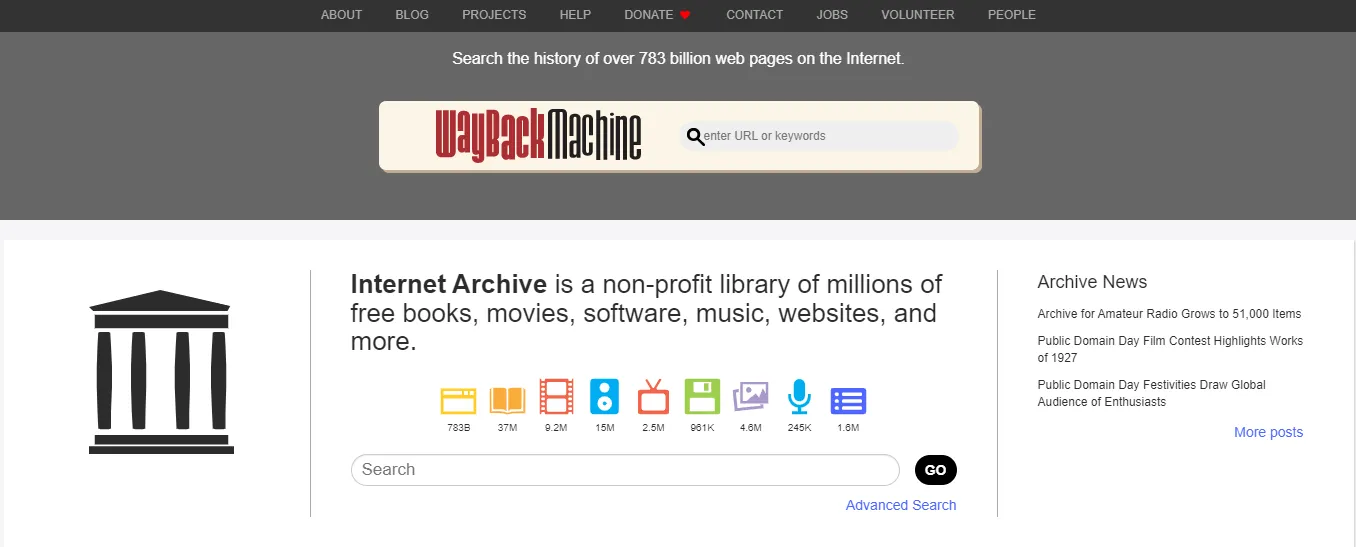
Therefore, for personal sites, regularly submitting your website to the Internet Archive is particularly necessary—this is how you leave more traces on the internet.
There are also methods to save entire sites—including external elements. For specific methods, see this post.
Below is the progress after I sought help in the ArchiveBot channel, showing the archival process of my website by the ArchiveBot administrator. It's clear that archiving an entire site includes archiving the external sites it links to. This is the most effective way to archive a whole site—you must archive the external sites your site references to truly preserve the whole site's memory.
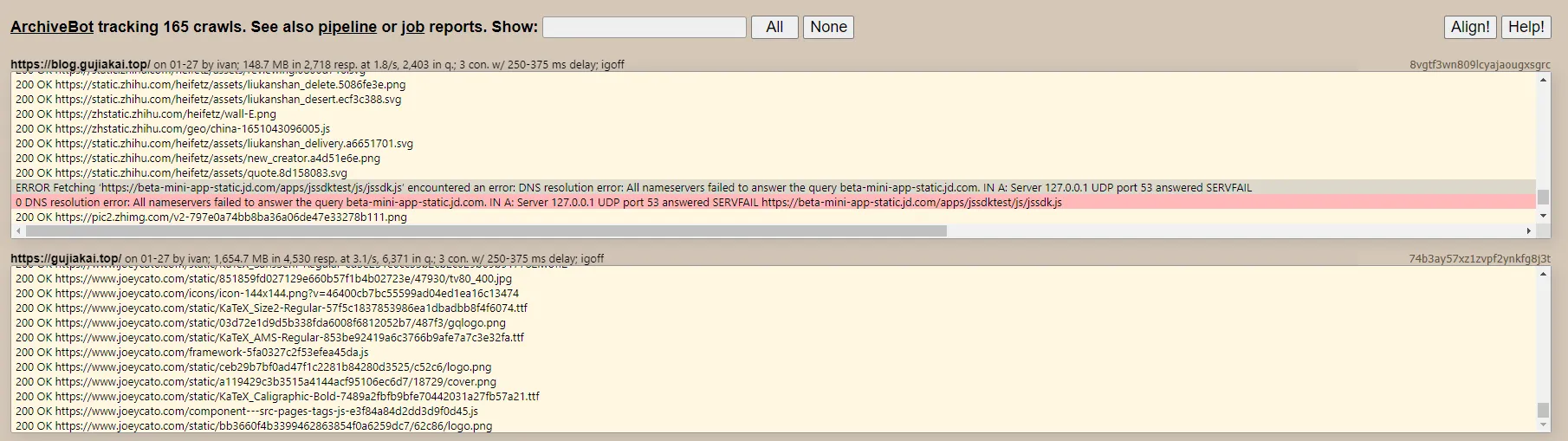
Of course, this type of archival is costly, so ArchiveBot administrators add ignore rules to the archival program to save costs.
Last year, Baidu search engine discontinued its snapshot feature. Baidu claimed, "As technology matures and website stability can be guaranteed, the snapshot feature is no longer needed." But is that really the case? I personally disagree with Baidu's approach. The snapshot feature still has value for users wanting to see what taken-down websites looked like. Hastily removing the snapshot feature further dissipates internet memory.
The internet needs not just fast-food, disposable culture—it needs an archival service to preserve its memory. Undoubtedly, the Internet Archive is ahead of its time in this regard. While there may be controversial content archived there too, this doesn't diminish its value and significance.
You can say the internet has memory, but don't forget its fragility. Remember to use the Internet Archive more to preserve your traces on the internet!
Interesting
- The shortest path doesn't equal the fastest path.

- English prepositions GIF demonstration.

- On January 26, 2023, NBA Warriors home game against the Grizzlies, Curry was ejected for throwing his mouthguard.

The interesting part is that Curry was applauding Poole's 3-point attempt just a second before, but when he saw the shot missed, Curry angrily threw his mouthguard. The contrast is hilarious—truly deserving of his nickname "Baby Face."
- Cloudflare uses lava lamp wall to help encrypt the internet.

A 2017 tech news story. Cloudflare is a well-known tech company providing services like CDN acceleration and DDoS protection. Due to computers' shortcomings in randomness, Cloudflare uses photos of 100 lava lamps converted into random data for SSL (Secure Sockets Layer) encryption.
Appendix 1: Cloudflare blog
Appendix 2: YouTube video link
Link Sharing
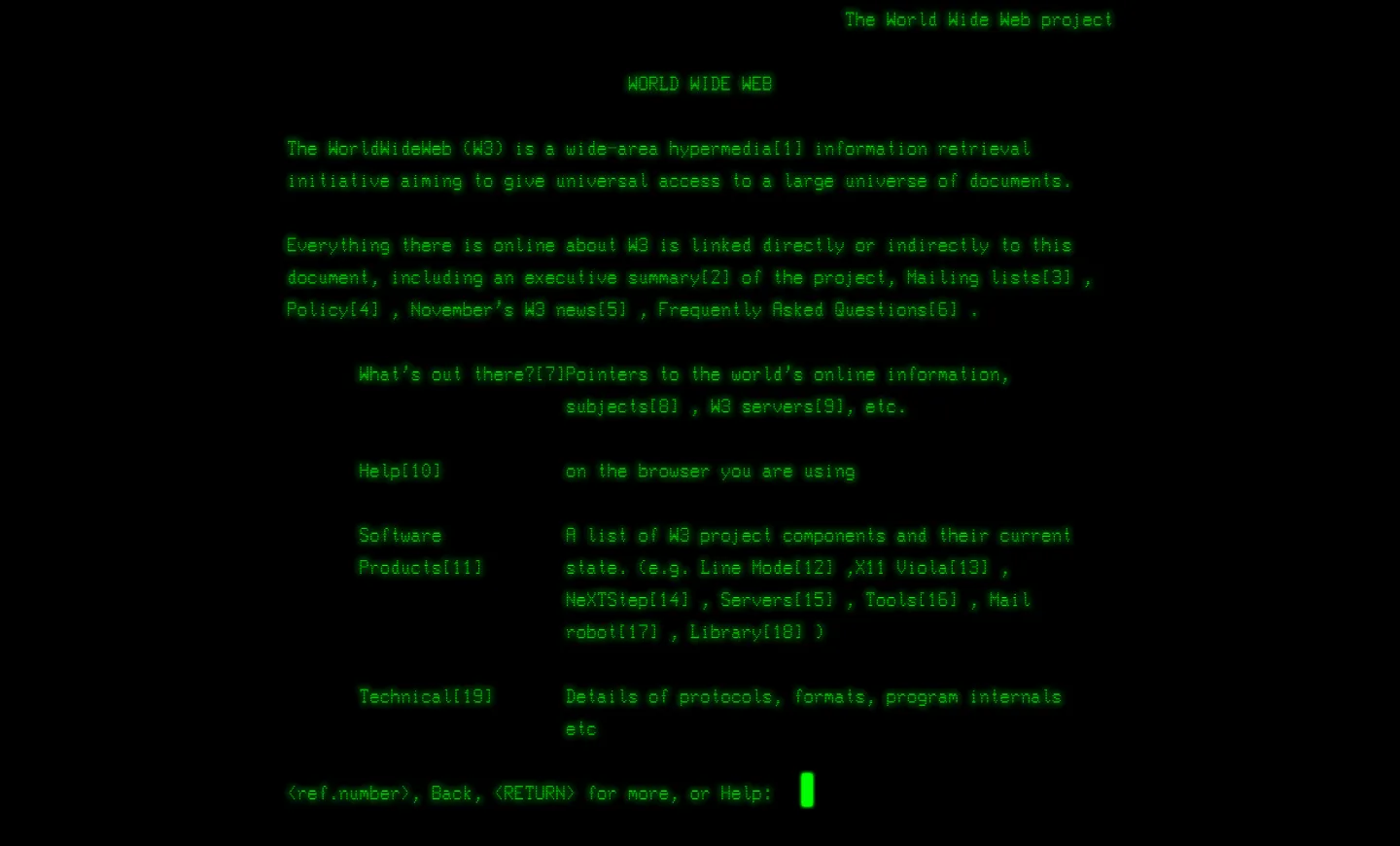
When learning computer networks, we only learn that the inventor of the World Wide Web is Sir Tim Berners-Lee from the UK. But there's actually a story about the internet's origins worth exploring.
Sir Tim Berners-Lee launched the first website on December 20, 1990. The site was hosted on a NeXT computer at CERN (European Organization for Nuclear Research) and was only accessible within CERN's internal network. It was dedicated to providing information about the World Wide Web project. It went public on August 6, 19912.
Later, for various reasons3, the first website was lost. In 2013, CERN restored the site4. But if you access it with a modern browser, you might not see the image shown above. That's because the image is a screenshot of the first website accessed through the Line Mode Browser (the world's second web browser).
CERN's restored first website homepage also provides an option to browse using the Line Mode Browser, but currently (as of January 26, 2023), clicking on it with modern browsers gives a 503 Service Unavailable error5. For more details, see the Line Mode Browser 2013 page.
Appendix 1: Sir Tim Berners-Lee was honored as the "Inventor of the World Wide Web" at the London Olympics, using an old NeXT computer at the opening ceremony. "This Is For Everyone" fully demonstrated his open-source spirit. Bilibili video link
Appendix 2: In 2014, computer enthusiast Suhayl Khan demonstrated how to access the Line Mode Browser using 1960s technology—commemorating the 25th anniversary of the World Wide Web. Bilibili video link


A programming game website—solve problems with the fewest bytes/characters to get higher rankings. Project open source

This website is dedicated to decoding computer technology and computer history-related content.
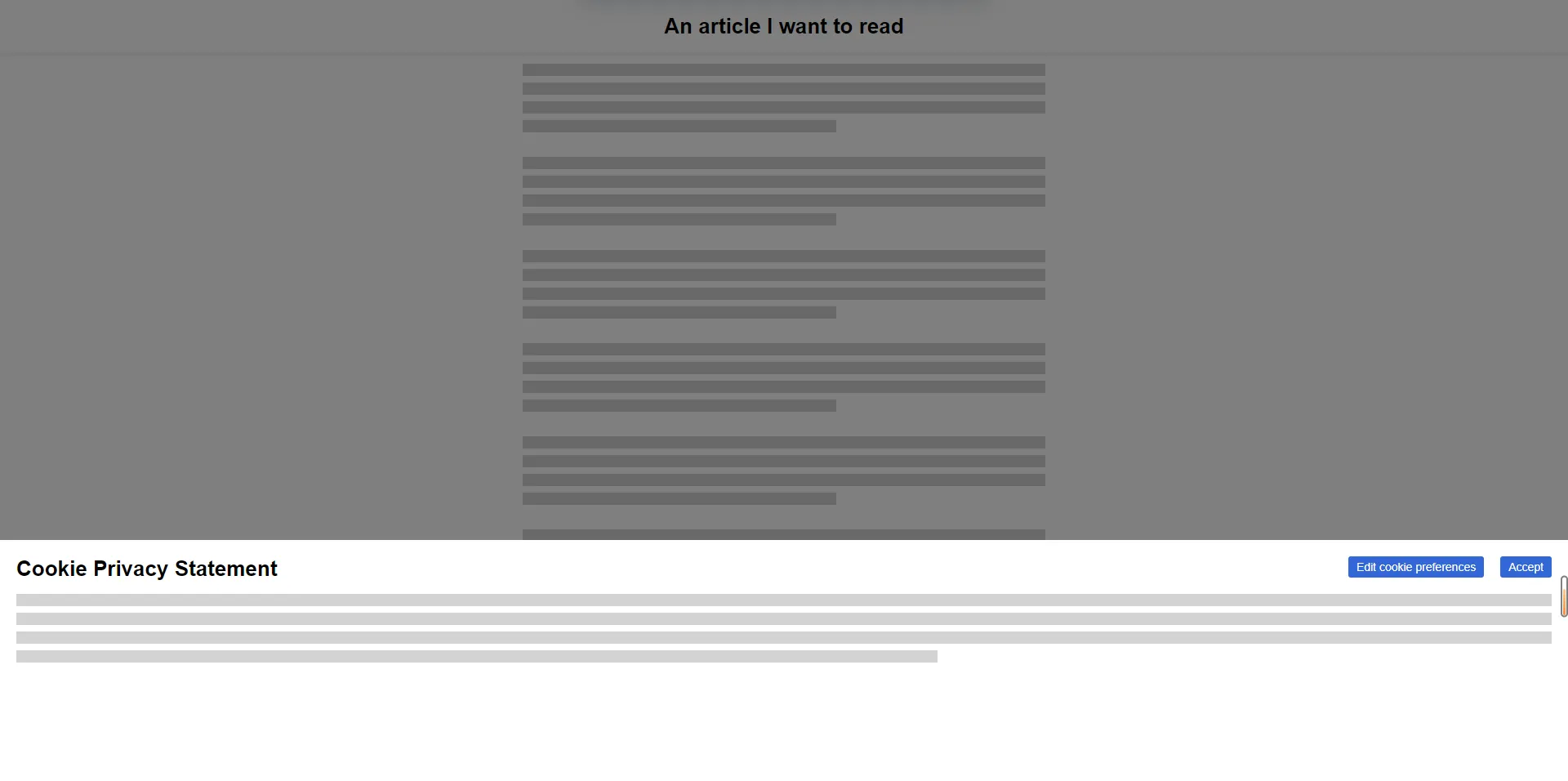
This website demonstrates the current state of contemporary internet experience. Cookie privacy statements, website notifications, newsletter subscriptions, requests to pay when ad blockers are detected, pop-ups... Of course, this is just the situation abroad.
In China, the internet experience generally happens on mobile. But mobile is the same—splash ads, app pop-ups... Although there are ways to block them, these profit-driven nuisances seriously impact user experience.
Recently, I saw a post on HackerNews "thanking HackerNews for being ad-free, etc." A comment there made me laugh.

Ironically, so many professionals come to HackerNews to breathe fresh air, after which they go back to building the user experience they originally fled from. -- HackerNews user comment
Commenters replying to this note that developers don't have a say in user experience. Indeed, those who truly define user experience are bosses and capital. Programmers work for bosses to feed their families. Facing things they dislike that are added for users, they can only add them according to the boss's wishes.
I hope in the future, there's technology that can free user experience from capital's grip and return the internet to purity!

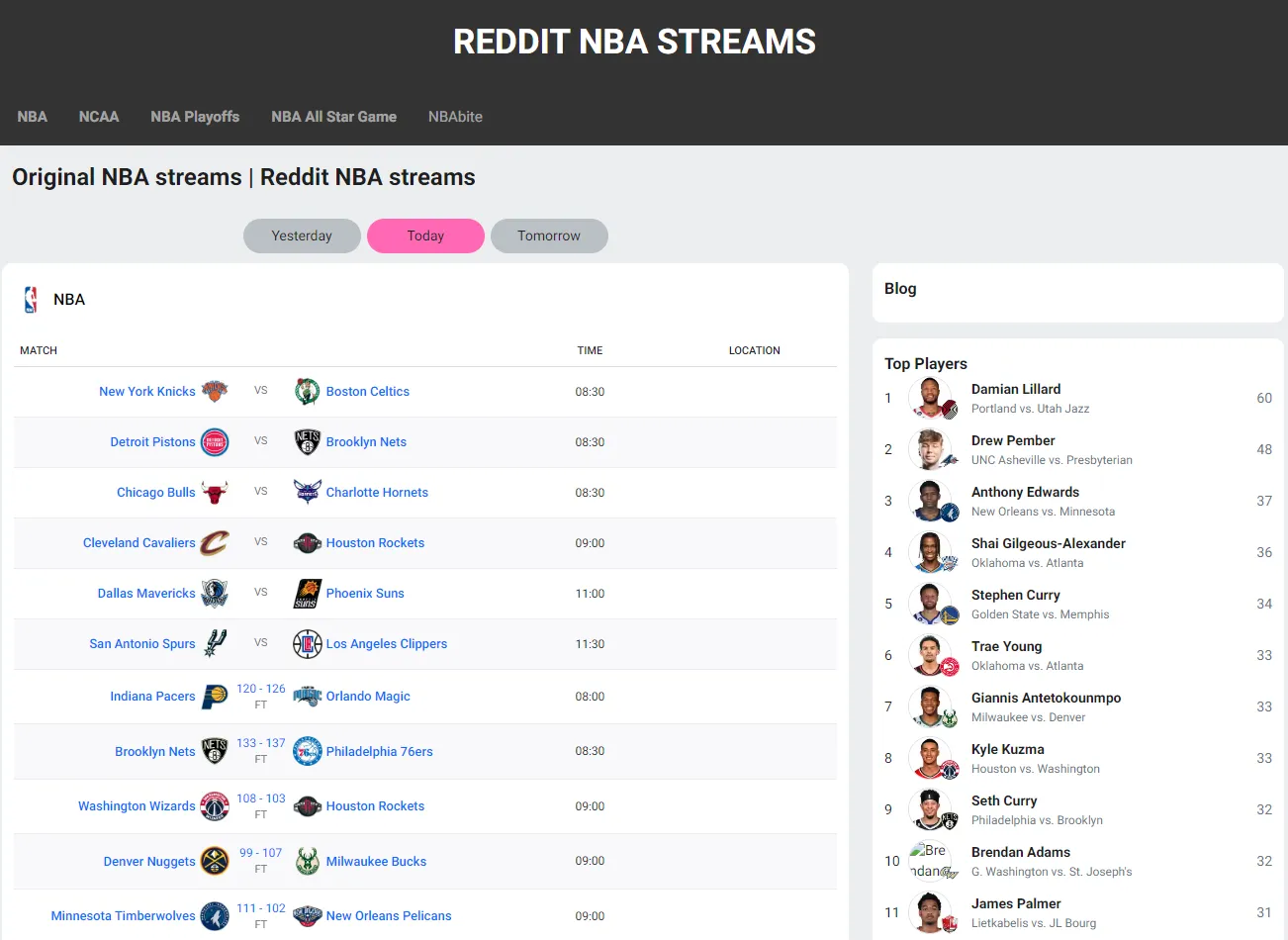
These two foreign websites allow you to watch NBA live streams for free. Achieve NBA viewing freedom.
Quotes
- For me, writing your own styles is like writing test code: a little slow at first, but the early effort pays off. In the long run, you'll save a lot of time, energy, and frustration.
-- You Don't Need A UI Framework

- What reader is smarter and more suitable for the masses, and will become a replacement for Google Reader? My team and I answered: algorithm-based personalized recommendations.
-- Applauding Page's Courage to Shut Down Google Reader!
- Basically, if we want to return the internet to users' hands, we need to decouple "services" from "storage." Companies should not be allowed to hold user data hostage.

- But I appreciate Jason Werner's (former GitHub CTO) view more. He believes AI will replace developers' jobs the same way C and JavaScript "replaced" early developers writing assembly code. They didn't really replace those developers—they just introduced another layer of abstraction and automation, fundamentally changing how they program and interact with computers.
-- Bytes

- Playing games is a voluntary attempt to overcome unnecessary obstacles.

- Nobody truly owns a domain name, just as nobody truly owns a piece of land. Before it belongs to anyone, it has been traded with many parties; in this case, the parties can sell it and buy new land. Everything is borrowed.
-- Permalinking vs Transience.

Footnotes
-
Although I've reviewed many online resources, none explain in detail. Website going offline is likely due to the NeXT computer's limited lifespan, etc. In that era, hosting a website required having your own server and keeping it running 24/7. Keeping it on 24/7 couldn't last many years for machines of that era—unlike today's cloud servers where hardware updates and iterations happen without user awareness. ↩
-
I also tried finding archives in the Internet Archive of when you could use the Line Mode Browser to access the first website in modern browsers, but the archived pages display poorly. ↩